How this list was put together
Every marketing tool roundup published in January says roughly the same thing, because most of them are assembled from the vendors’ own landing pages. This one started somewhere else: 1,976 comments pulled from twenty tool-focused threads across r/SEO, r/marketing, r/bigseo, r/DigitalMarketing, r/PPC and r/content_marketing, covering the last twelve months.
For each tool I counted how many separate comments mentioned it and the total upvotes those comments carried. That second number matters more than it looks. Semrush is mentioned more often than Screaming Frog, but the Screaming Frog comments carry more weight per mention, which is usually the signature of a tool people defend rather than merely subscribe to.
A note on what is not here. No tool made this list because it has an affiliate programme, and several popular ones were left out because the threads discussing them were mostly complaints. Where a free tool does the same job as a paid one, the free tool is the recommendation.
The short version
| Tool | What it is for | Pricing |
| Google Search Console | What you actually rank for | Free |
| Ahrefs | Backlinks and keyword research | From $129/mo |
| Semrush | All-in-one SEO and PPC | From $139/mo |
| Screaming Frog | Technical site crawls | Free to 500 URLs / €245 a year |
| Google Analytics 4 | Traffic and conversions | Free |
| Looker Studio | Client-ready dashboards | Free |
| Microsoft Clarity | Heatmaps and session replay | Free |
| Google Trends | Demand and seasonality | Free |
| AnswerThePublic | Question-shaped keywords | Limited free / from $99/mo |
| SparkToro | Where your audience actually is | Free tier / from $50/mo |
| Similarweb | Competitor traffic estimates | Limited free / paid |
| ChatGPT | Drafting, analysis, bulk work | Free / $20/mo |
| Claude | Long-document work and editing | Free / $20/mo |
| Perplexity | Sourced research and AI visibility | Free / $20/mo |
| Notion | Content calendar and briefs | Free / from $10/mo |
| Canva | Fast on-brand visuals | Free / from $15/mo |
| Descript | Video and podcast editing by text | Free / from $19/mo |
| Zapier | Connecting tools without code | Free / from $30/mo |
| n8n | Self-hosted automation | Free self-hosted / from €24/mo |
| Sowiks | Screenshots that become links | Free / $14.99 one-time |
Search data: what you rank for and why
1. Google Search Console
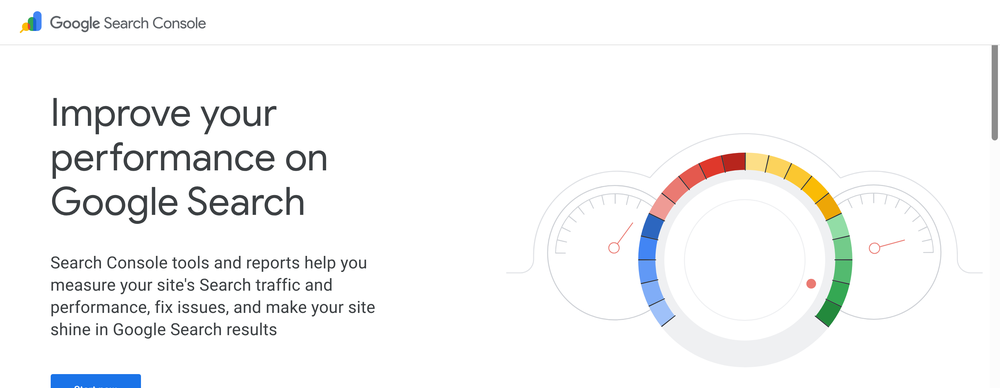
Why it matters. Every paid SEO tool estimates your rankings. Search Console reports them. It is the only source that tells you what Google actually showed your pages for, how often people clicked, and which queries you rank on page two for without knowing it. That last report is the cheapest content work available: pages already ranking 11 to 20 usually need a better title and one section added, not a rewrite.
Worth knowing. The 16-month data limit catches people out, so export regularly or pipe it into Looker Studio. It carried 242 upvotes across its mentions, one of the highest ratios in the sample, and the recurring sentiment was that people who skipped it spent months optimising for keywords they were never close to ranking for.
Pricing. Free, and it stays free.
2. Ahrefs
Why it matters. Ahrefs is where you go to answer two questions: who links to a site, and what is a keyword actually worth. Its backlink index is still the reason most SEOs keep it, and Site Explorer makes competitor teardowns fast — you can see which pages earn a competitor’s traffic and which links carry them, then decide whether either is reachable for you.
Worth knowing. The pricing has become the main complaint in every thread it appears in, particularly the credit system on lower plans. If you only need keyword volumes, cheaper tools do that adequately. If you need link data you can trust, this is where it is.
Pricing. From about $129 a month. Free Webmaster Tools give limited data for sites you verify.
3. Semrush
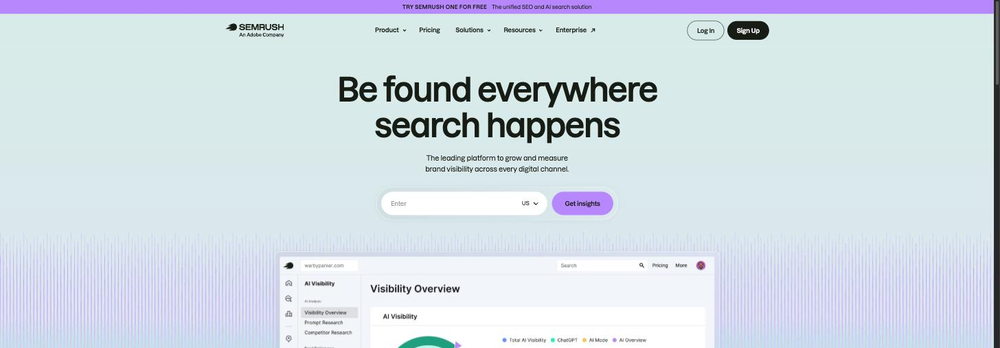
Why it matters. Semrush is the most-mentioned paid platform in the sample, and its appeal is breadth: keyword research, rank tracking, site audits, competitor PPC data and social scheduling in one subscription. For a solo marketer or a small team that cannot justify four separate tools, consolidating into one is a legitimate reason to pick it over deeper specialists.
Worth knowing. Breadth is also the criticism. Practitioners in the threads consistently rated its link index below Ahrefs and its crawler below Screaming Frog. It is the better generalist, not the better specialist.
Pricing. From about $139 a month, with a limited free account.
4. Screaming Frog SEO Spider
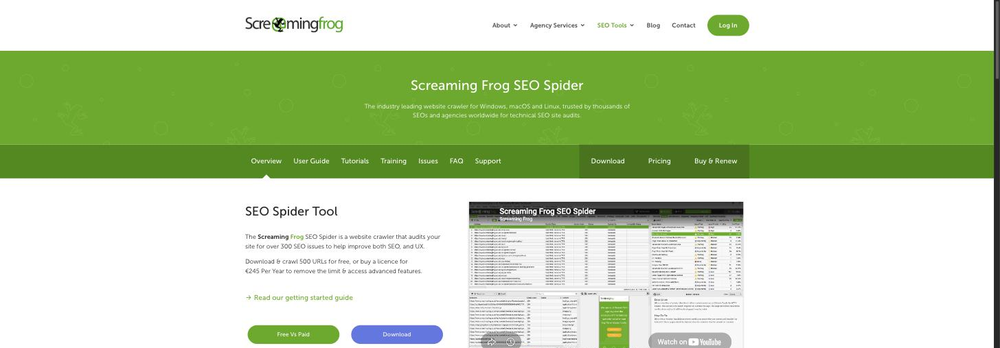
Why it matters. This is the tool with the highest upvote-per-mention ratio in the entire sample, and the reason is that it does one job completely. It crawls a site the way a search engine would and hands you every redirect chain, broken link, duplicate title, missing canonical and orphan page in a sortable table. Connect it to Search Console and Analytics and you can find pages that get crawled, rank for nothing and earn no traffic — the ones worth deleting or merging.
Worth knowing. It runs on your own machine rather than in the cloud, so large crawls need memory, and the interface rewards learning rather than guessing.
Pricing. Free up to 500 URLs, which covers most small sites. €245 a year unlocks the rest.
5. Google Trends
Why it matters. Keyword tools give you an averaged monthly volume, which quietly hides the thing you most need to know: whether demand is climbing, collapsing or seasonal. Trends shows the shape. For content planning it answers when to publish, and for category research it shows whether a topic is growing before you commit a quarter to it.
Worth knowing. The numbers are relative, not absolute, so it complements a volume tool rather than replacing one. The comparison view — up to five terms side by side — is the feature most people underuse.
Pricing. Free.
6. AnswerThePublic
Why it matters. It turns a seed keyword into the questions people actually type: what, why, how, versus, for. That maps almost directly onto headings, FAQ blocks and the kind of specific phrasing that gets quoted by AI search engines. When you are staring at a topic with no angle, this is the fastest way to find twenty of them.
Worth knowing. The free tier is now tightly limited, and the output needs judgement — plenty of generated questions have no real search demand behind them. Cross-check anything you plan to build a page around.
Pricing. A few free searches a day, paid plans from about $99 a month.
7. SparkToro
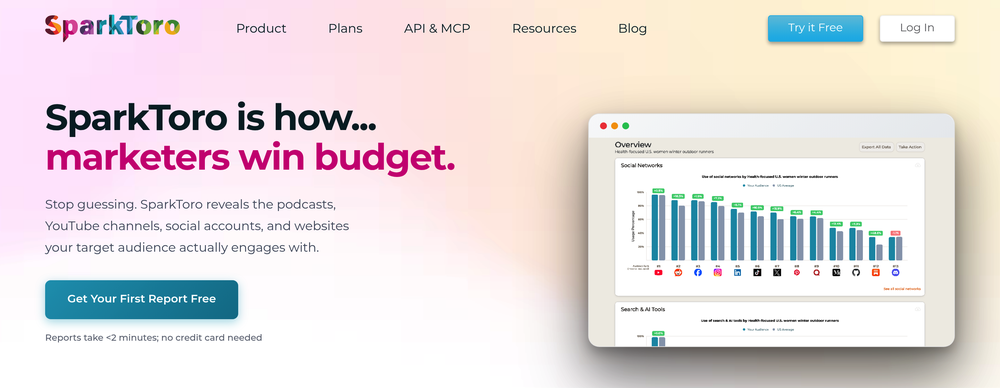
Why it matters. Every other tool here tells you about search. SparkToro tells you about people: which podcasts your audience listens to, which accounts they follow, which publications they read. That is the input for outreach, guest posting, partnerships and ad targeting, and it is the gap most SEO-heavy stacks have. It answers “where else is this audience” rather than “what do they search”.
Worth knowing. Data quality depends on the size of the audience you query. Niche B2B segments return thinner results than consumer ones.
Pricing. A usable free tier, paid plans from around $50 a month.
8. Similarweb
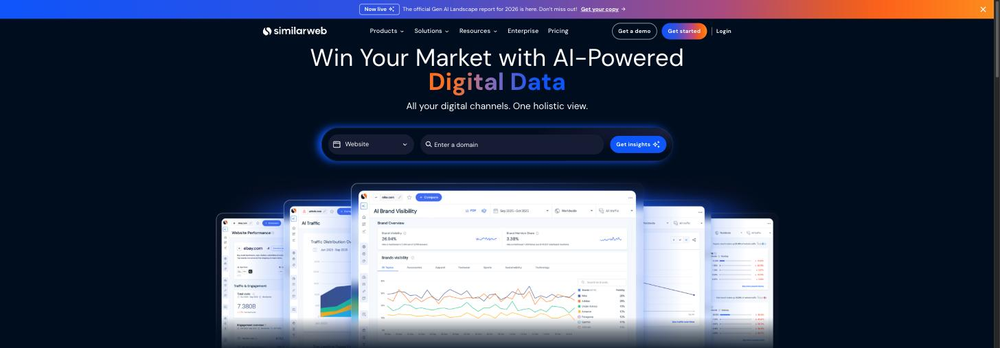
Why it matters. When you need to estimate how much traffic a competitor gets and where it comes from — search, direct, referral, social, paid — Similarweb is the standard reference. It is particularly useful in pitches and strategy documents, where a defensible traffic-share estimate carries more weight than a claim.
Worth knowing. The estimates are modelled, not measured, and accuracy drops sharply for smaller sites. Treat the trend and the channel split as signal, the absolute number as an approximation.
Pricing. Limited free view in the browser extension; full plans are enterprise-priced.
Analytics: what happened after they arrived
9. Google Analytics 4
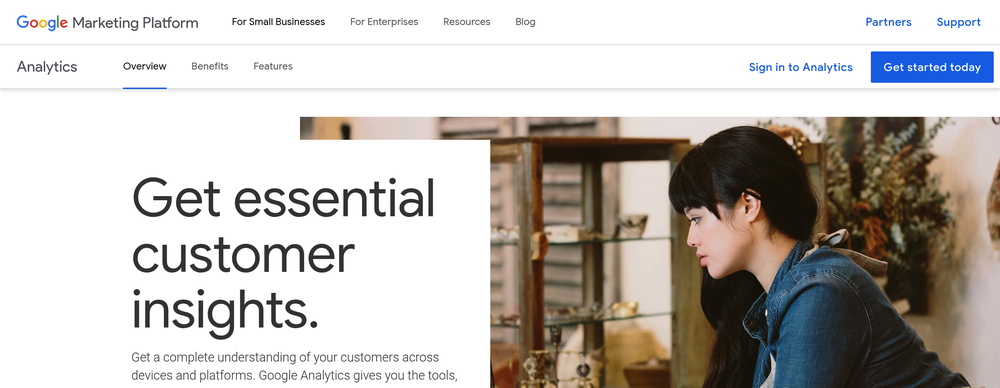
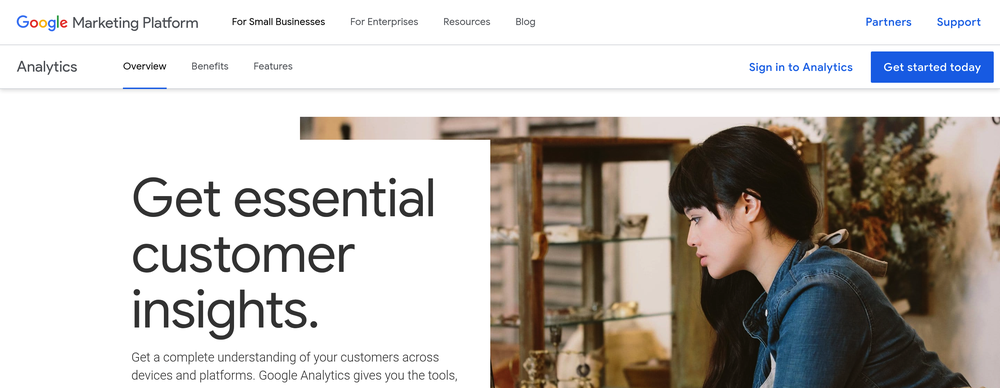
Why it matters. Whatever you think of the migration, GA4 is where conversions live, and the marketer who can build a clean funnel in it is measurably more useful than one who cannot. The practical value is in Explorations: segment by landing page and channel, compare converting sessions with the rest, and you can usually see which content assists revenue rather than merely collecting sessions.
Worth knowing. The default reports are the weakest part of the product. Set up conversion events properly on day one, because GA4 does not backfill.
Pricing. Free at any volume a normal site will reach.
10. Looker Studio
Why it matters. This is what turns Search Console and Analytics into something a client or a manager will actually read. Connect both, build one dashboard, and monthly reporting becomes a link you send instead of a deck you rebuild. Blending Search Console impressions with Analytics conversions on the same page is the single most useful report most teams never make.
Worth knowing. It gets slow with large blended data sources, and the connectors occasionally need reauthorising. Build one template, then reuse it per client.
Pricing. Free.
11. Microsoft Clarity
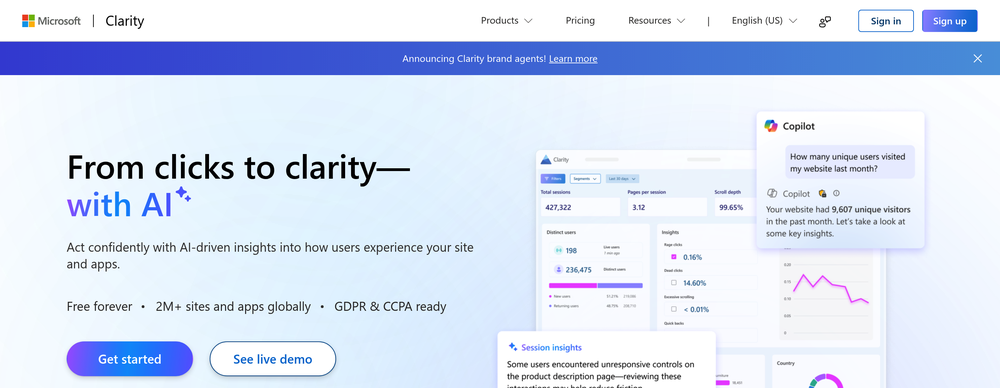
Why it matters. Clarity records sessions and builds heatmaps, then flags rage clicks, dead clicks and excessive scrolling automatically. Analytics tells you a landing page converts at two per cent; Clarity shows you the twelve people who clicked a heading because it looked like a button. For conversion work on a page you already have traffic to, it is the fastest path from number to cause.
Worth knowing. It is genuinely free with no session cap, which is unusual in this category and the main reason it keeps displacing paid alternatives in the threads.
Pricing. Free.
AI: where it earns its place, and where it does not
12. ChatGPT
Why it matters. The most-mentioned tool in the entire sample, though rarely for the reason vendors advertise. The useful applications marketers described were structural rather than creative: clustering a thousand keywords into topics, turning a messy export into a table, writing the regex for a Search Console filter, drafting the first version of a brief. It compresses the work around the writing more than the writing itself.
Worth knowing. The clearest consensus in the sample was about publishing raw output. A 147-comment thread landed on the conclusion that fact-checking generated copy took longer than writing from scratch, which is worth taking seriously before building a workflow on it.
Pricing. Free tier, Plus at $20 a month.
13. Claude
Why it matters. Marketers in the threads reach for Claude on long documents: editing a 3,000-word draft without losing the thread, working through a research report, rewriting for tone across a whole page rather than a paragraph. It also tends to follow a detailed brief more literally, which matters when you have a style guide you need respected rather than reinterpreted.
Worth knowing. The same fact-checking caution applies. Treat it as a fast, tireless editor, not a source.
Pricing. Free tier, Pro at $20 a month.
14. Perplexity
Why it matters. Two jobs. First, research with citations you can open and verify, which removes the main risk of using a chatbot for facts. Second, and increasingly the reason it appears in SEO threads, it is a place your brand can be cited or ignored. Searching your own category in Perplexity and noting which sources it quotes is the cheapest AI-visibility audit available.
Worth knowing. Be sceptical of the tooling built around this. A 156-comment thread on measuring AI visibility concluded that most paid monitoring in this space is unproven, and manual checking remains more honest.
Pricing. Free tier, Pro at $20 a month.
Production and workflow
15. Notion
Why it matters. Most marketing teams do not need another project tool; they need one place where the content calendar, the briefs and the published archive live together. Notion does that with databases that show the same content as a calendar, a board or a filtered list, so a writer sees their queue and a manager sees the quarter without maintaining two systems.
Worth knowing. The failure mode is over-building. Teams that spend a week designing the perfect workspace usually abandon it. Start with one database and add views only when something is genuinely hard to see.
Pricing. Free for individuals, from about $10 per user a month for teams.
16. Canva
Why it matters. For social posts, ad variants, blog headers and slide decks, Canva removes the dependency on a designer for work that never needed one. Brand kits keep colours and fonts consistent across a team, and the resize function turns one graphic into every placement you need, which is where the hours actually go.
Worth knowing. It is a production tool, not a design system. Anything that carries the brand at scale still deserves a designer.
Pricing. Free tier, Pro from about $15 a month.
17. Descript
Why it matters. Descript transcribes video and audio, then lets you edit the media by editing the transcript. Delete a sentence in the text and it disappears from the video. For repurposing a webinar into clips, cleaning up a podcast, or pulling quotes out of customer interviews, it collapses a specialist skill into something a marketer can do in an afternoon.
Worth knowing. Filler-word removal and the studio features are genuinely good, but exports on lower tiers are watermarked and the free plan is a trial in practice.
Pricing. Free tier, paid from about $19 a month.
18. Zapier
Why it matters. Zapier connects the tools that do not talk to each other: a form submission becomes a CRM record and a Slack message, a published post becomes a scheduled social queue, a new backlink alert becomes a row in a sheet. For a marketer without engineering support, it is the difference between a workflow that runs and one that depends on someone remembering.
Worth knowing. Task-based pricing escalates quickly once automations touch real volume, which is exactly the point at which people start looking at the next entry.
Pricing. Limited free tier, paid from about $30 a month.
19. n8n
Why it matters. n8n does the same job as Zapier but can be self-hosted, so the cost stops scaling with the number of tasks and the data stays on infrastructure you control. It appeared in these threads more often than Zapier did, usually from people running higher-volume automations or handling client data they are not comfortable routing through a third party.
Worth knowing. Self-hosting is the trade. You get control and flat costs; you also own the updates and the downtime. The cloud version removes that at a price closer to its competitor.
Pricing. Free self-hosted, cloud from around €24 a month.
20. Sowiks screenshot tool
Why it matters. Marketing generates an unreasonable number of screenshots: feedback on a landing page, a broken tracking tag, a competitor’s ad, a ranking change worth flagging. The default path turns each one into a file you rename, compress and attach. Sowiks ends the capture with a link instead — you take the shot, mark it up with an arrow or blur a client name, and paste a URL into Slack or the ticket. Nobody downloads anything, and the person reading it sees the context immediately.
Worth knowing. It covers scrolling capture and screen recording as well, which handles the two cases that usually force a second tool: a full-page competitor teardown, and a bug that is easier to show than describe. Password-protected links with expiry dates matter when the screenshot has client data in it.
Pricing. Free for unlimited local capture and editing. $14.99 one-time adds cloud links and recording, with no subscription.
Building a stack that does not bankrupt you
Added up at list price, everything above costs more than most marketing salaries justify. Almost nobody runs all twenty, and the useful question is which order to buy in.
If your budget is zero, you can go a surprisingly long way: Search Console, Analytics, Looker Studio, Clarity, Trends and Screaming Frog’s free tier cover research, measurement, reporting and technical auditing without a card. That combination is stronger than a single mid-tier paid subscription, and it is where anyone starting out should begin.
The first paid tool should be whichever of Ahrefs or Semrush matches your actual work. If you spend your time on links and competitor analysis, Ahrefs. If you need one platform to cover SEO, PPC and reporting because you are the only marketer, Semrush.
Add automation last. Zapier and n8n multiply a process that already works; they do not create one. Teams that automate first usually end up maintaining broken workflows for a system nobody uses.
FAQ
What digital marketing tools does a small team actually need?
Search Console, Google Analytics 4, Looker Studio and Microsoft Clarity, all free, cover measurement and reporting. Add Screaming Frog’s free tier for technical checks and one paid research tool — Ahrefs or Semrush — when keyword and link data becomes the bottleneck. That is six tools, one of them paid.
Are paid SEO tools worth it in 2026?
For link data and competitive research, yes: nothing free matches Ahrefs or Semrush there. For rank tracking and keyword volumes, the gap has narrowed considerably, and Search Console plus Google Trends answers a lot of it. The honest test is whether you have made a decision in the last month that the paid data changed.
Which free SEO tools are genuinely good?
Google Search Console, Google Analytics 4, Looker Studio, Microsoft Clarity and Google Trends are free permanently and are not stripped-down trials. Screaming Frog is free up to 500 URLs, which covers most small sites completely.
Can AI tools replace an SEO or content manager?
Not on the evidence in these threads. The consistent finding was that AI compresses the work around content — clustering keywords, drafting briefs, cleaning exports, writing formulas — while publishing unedited output costs more time in fact-checking than it saves. Treat it as leverage on an experienced person, not a replacement for one.
How do I know if my brand appears in AI search results?
Search your own category in Perplexity, ChatGPT and Google’s AI results and record which sources get cited. It is manual and unglamorous, but a 156-comment thread on this exact question concluded that most paid AI-visibility monitoring is currently unproven, so manual checks remain the more defensible method.
The short answer
The stack that wins is not the biggest one. Almost every genuinely useful workflow in these threads was built on free tools plus one or two paid ones chosen deliberately, and the marketers who sounded most in control were running fewer tools than the ones who sounded overwhelmed.
Start with the free six. Add a paid research tool when you can name the decision it will change. Automate only what already works.